Pharos3D

Overview
Case Study
Multiple Fragments
Pharmacophore Precision Constraints
Search Configuration Options
Access Plans and Pricing
References
Overview
Pharos3D is a novel computational 3D-similarity search method that leverages and combines 3D-shape and pharmacophore models for the efficient virtual screening of ultra-large combinatorial spaces ranging well into the trillions. Pharos3D screens these spaces to identify candidates that mimic the shape and binding profile of a reference compound, typically a known bioactive conformer.
Small molecules are a cornerstone of modern medicine, comprising the majority of approved therapeutics and showing a consistent rise in new approvals. In drug discovery, computationally assisted hit expansion via scaffold hopping and lead optimization are pivotal strategies for identifying structurally novel lead candidates that mimic shape and function of known active compounds. These approaches are essential for initiating new medicinal chemistry programs, as they provide pathways to secure and expand intellectual property (IP) and resolve liabilities related to ADMET (absorption, distribution, metabolism, excretion, and toxicity).
Case Study
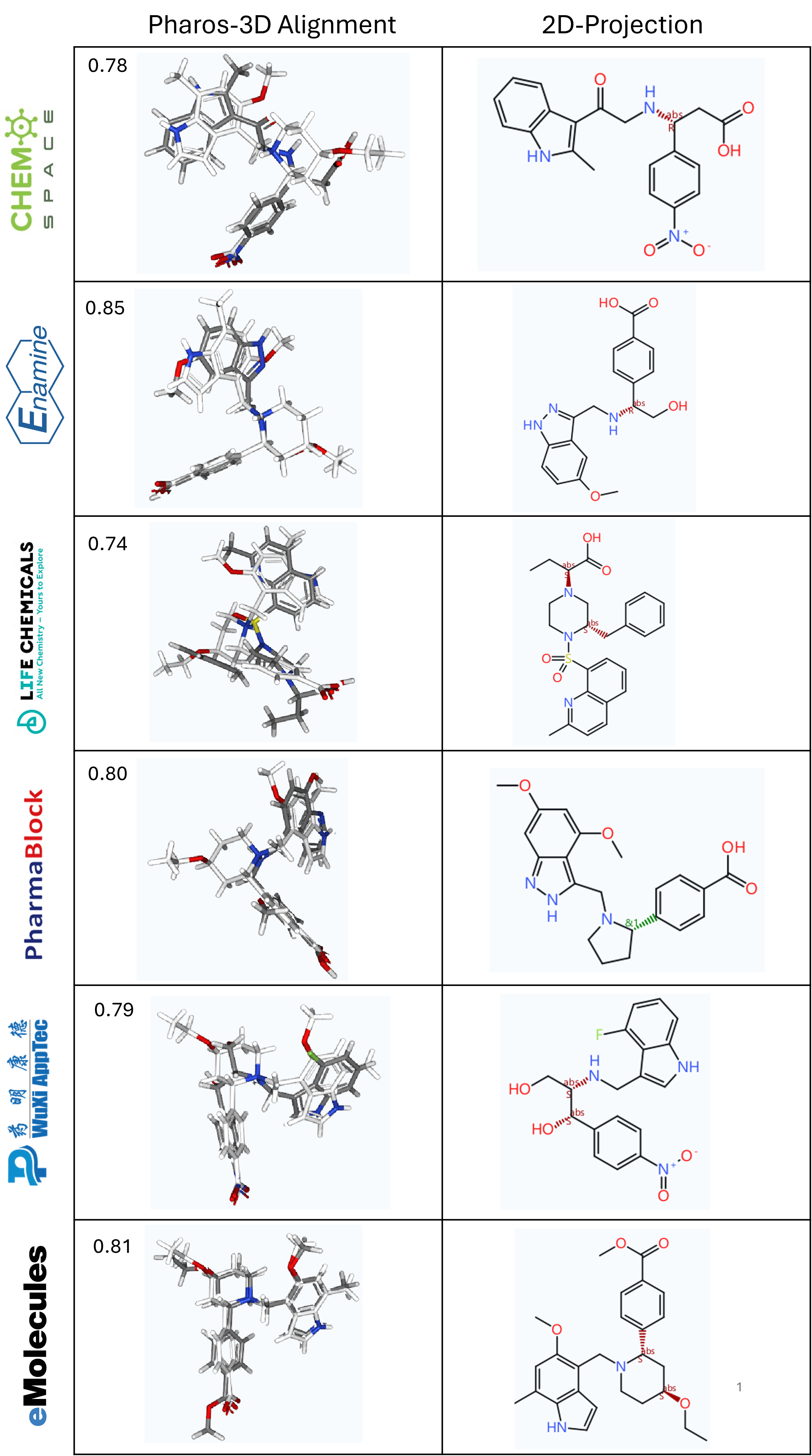
As an example result for Pharos3D, below depicted are the best Pharos3D alignments from each library with respect to the Pharos3D Score together with the respective 2D projections of each compound. The Pharos3D Score represents the shape similarity of the best matching low energy conformer to the query while considering potentially similar protein interactions. The score ranges from 0 to 1, indicating “no alignment” and “perfect alignment with equivalent interaction potential”, respectively.
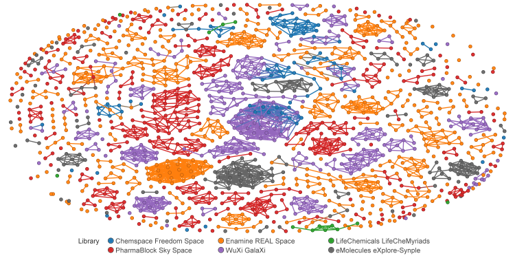
For the six vendor spaces, we selected all Pharos3D Scores larger than 0.7, and to retrieve structurally diverse hits from the result set, selected only hits with SkelSpheres Similarity smaller than 0.48. These selection rules yielded a set of 1395 hits, approximately 2.3% of all hits. To illustrate the similarity clustering of this selection, see below a similarity chart color-coded with respect to vendor library.
The SkelSphere Similarity measures 2D structural similarity based on the SkelSphere descriptor, and ranges from 0 to 1, indicating “no 2D structural similarity” and “2D structural identity”, respectively.
Multiple Fragments
Pharos3D can accept as input, multiple fragments oriented in a bioactive configuration relative to each other and returns single-molecule solutions to this boundary value problem.
Using Pharos3D, we searched the entire Alipheron Ultra-Large Space Collection containing just under 70 trillion compounds tow solve the Two-Fragment Problem posed by Galen J. Correy and Moira Rachman et al., in Exploration of structure-activity relationships for the SARS-CoV-2 macrodomain from shape-based fragment linking and active learning (https://doi.org/10.1126/sciadv.ads7187) for the two fragments 5S18 and 5RT3 oriented relative to each other, taken from PDB 7KQO. The best up to 50k hits from each space are combined to form a set of 429653 unqiue hits.
Class 1 in the top panel represents a pseudo-Pareto domain for the largest Pharos3D scores and lowest SkelSphere Similarities. This domain contains aboiut 11k single-molecule solutions to the boundary value problem posed in PDB 7KQO. These compounds exhibit significant scaffold diversity as shown in the UMAP in the left bottom panel, as well as docking scores ranging from -90 to -40 (right bottom panel).


For this particular two-fragment problem, the single-molecule solution with a relatively high Pharos3D Score (0.81) out of the set of 11k compounds selected above, is shown in an overlay video below.
Pharmacophore Precision Constraints
Pharos3D allows users to enforce exact structural requirements through the pharmacophore weighting option. For example, in the case of Adagrasib, a covalent KRAS G12C inhibitor, the fluorinated acrylamide was defined as an exact motif, to be held constant; consequently, the search algorithm will only return compounds that possess this specific structure. This capability streamlines the preselection of essential motifs required in the development of covalent inhibitors, PROTACs, and molecular glues.
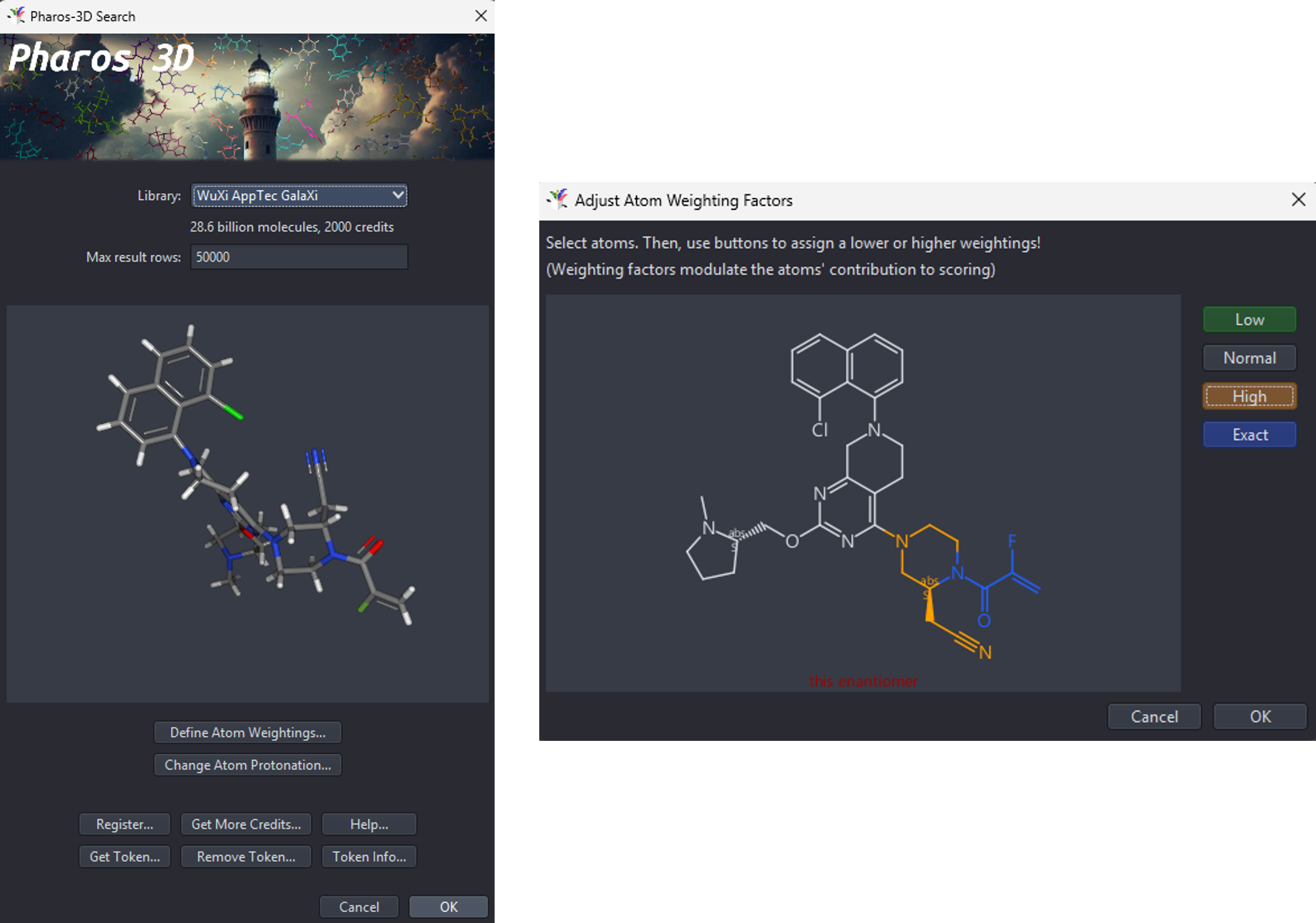
To demonstrate this feature, the fluorinated acrylamide of Adagrasib was held constant, while a high pharmacophore weight was applied to the remainder of the (S)-2-(Piperazin-2-yl) acetonitrile scaffold. This configuration ensures that search results strictly adhere to the covalent warhead geometry while prioritizing the core scaffold. A high-scoring hit from the Alipheron collection is displayed below in 3D view video overlay.
Impact for Medicinal and Computational Chemistry Teams
-
Medicinal Chemists: This capability enables researchers to strategically ’lock’ validated SAR elements, while exploring novel 3D chemical space. This facilitates scaffold hopping into unexplored chemotypes that maintain essential pharmacophoric features, thereby diversifying the intellectual property portfolio and identifying novel lead series with improved physicochemical profiles.
-
Computational Chemists: By reducing noise and enriching the hit list with molecules that align closely with a query’s key chemical characteristics, this method enhances the probability of determining a subset with significant interaction potential with the target. It serves as a critical pre-screening filter before advancing to computationally demanding downstream methodologies.
Search Configuration Options
A virtual screen with Pharos3D is performed via a plugin in DataWarrior by default. It is essentially the same than executing a Hyperspace search.
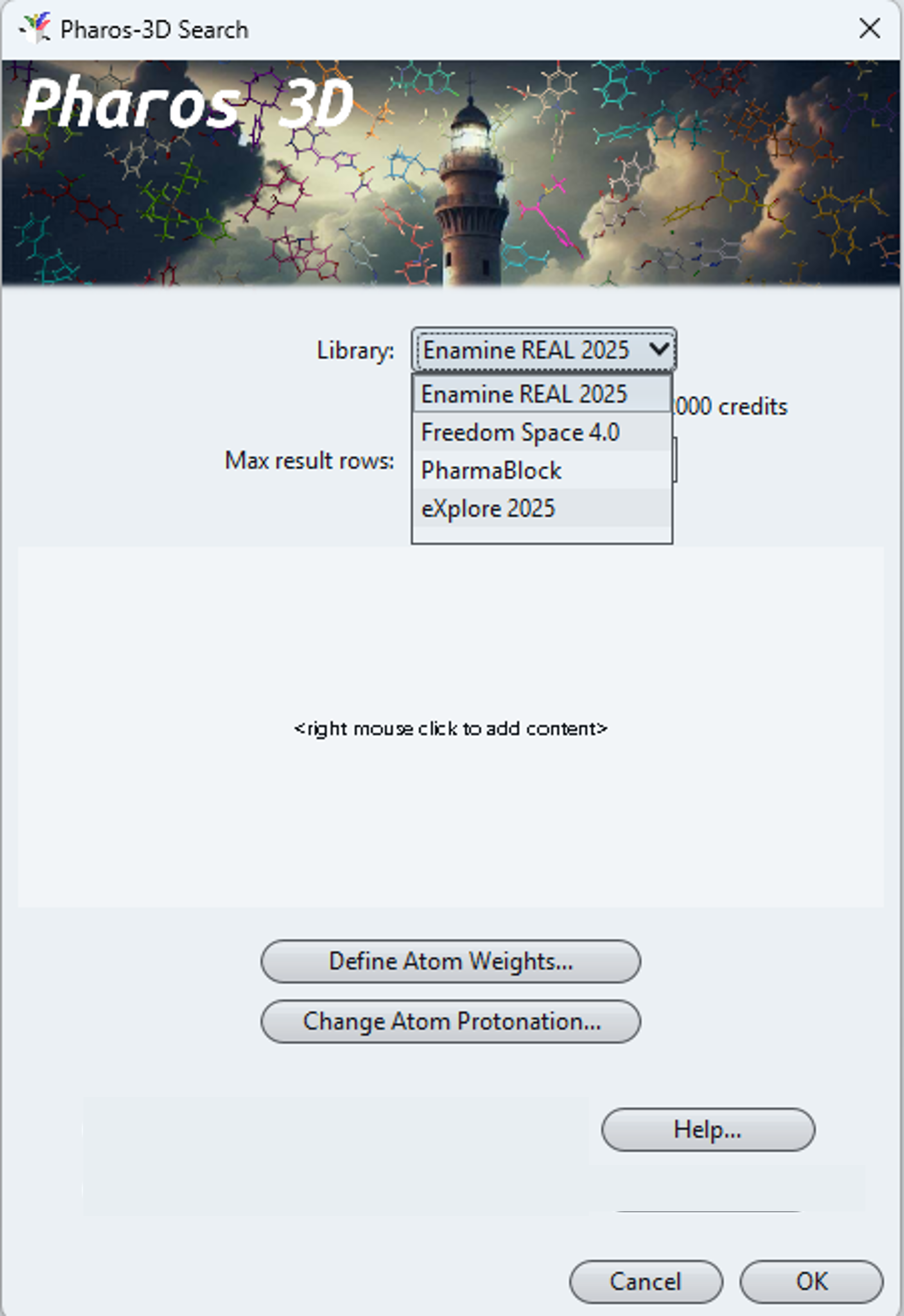
After selecting the space to be searched, you need to define your query conformer. A right
mouse click in the query field opens a menu letting you paste in or load a molecule from
a file or a ligand directly from the PDB database. You may change the protonation state of acidic or basic atoms and assign lower or higher importance to parts of the query conformer.
Pressing OK submits your query definition to the server, which immediately starts to work on
you request.
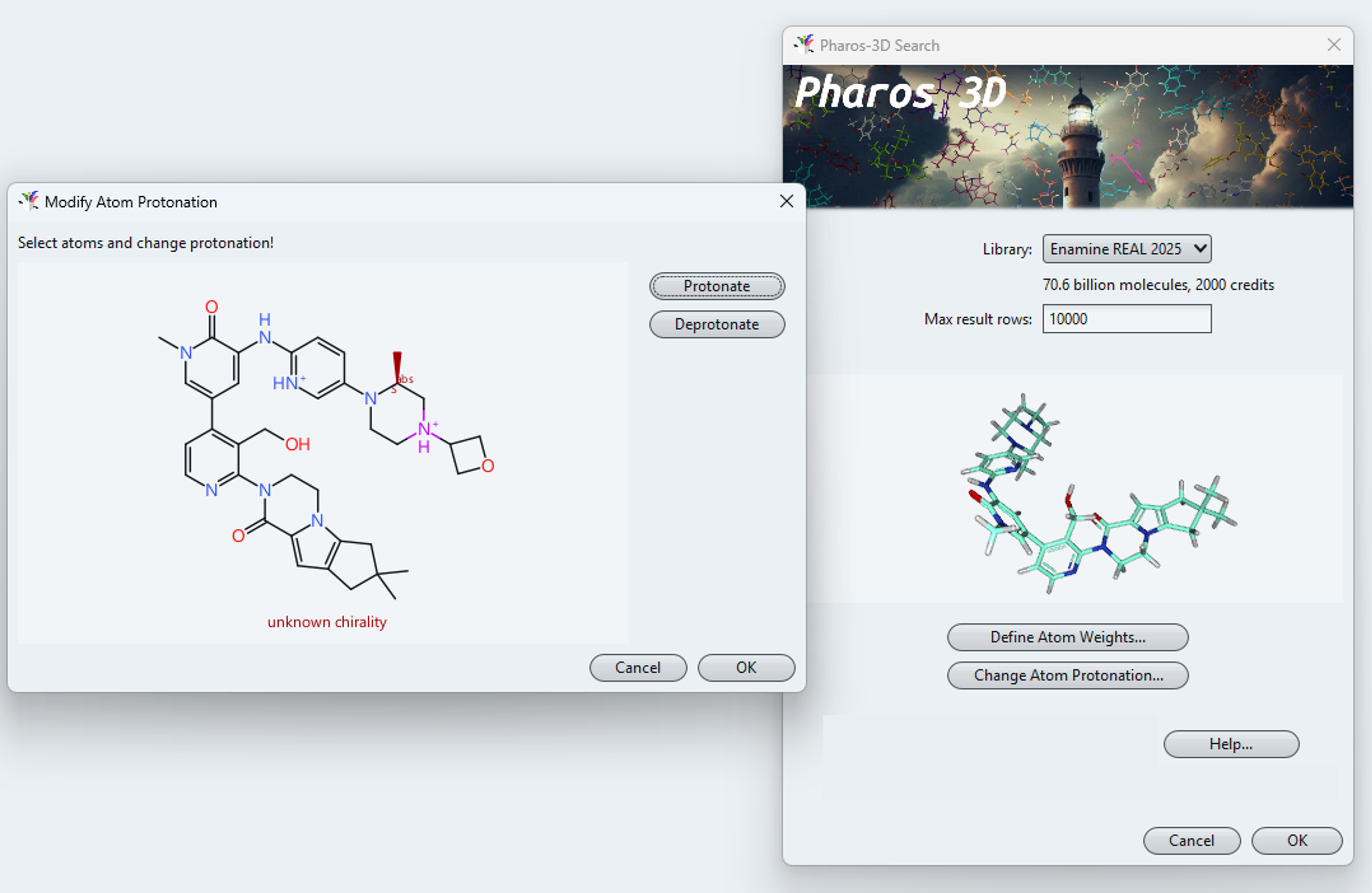
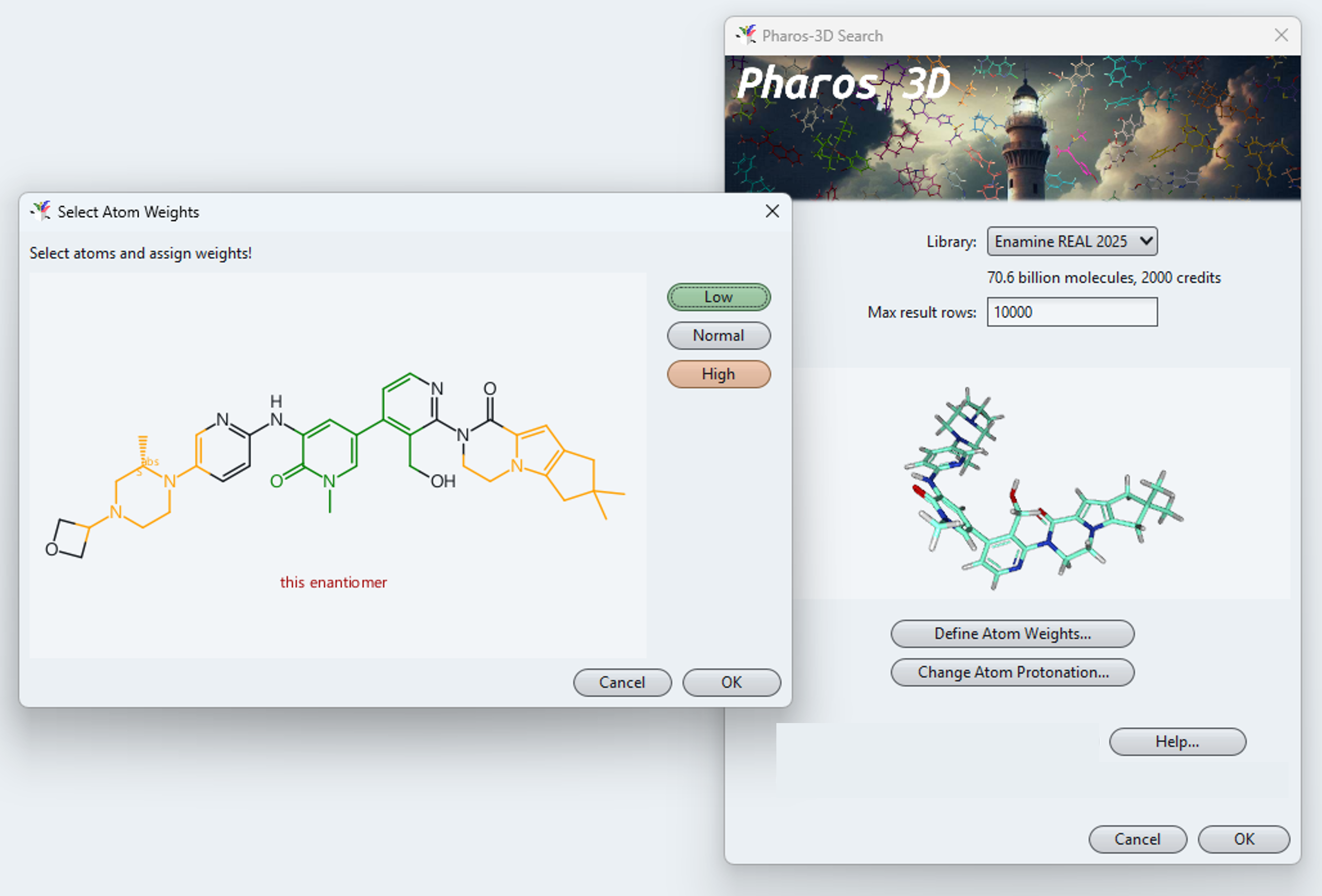
Pharos3D searches are computationally demanding, because they involve the generation of conformers of thousands of partially assembled and also completely enumerated structures. A typical result of a Pharos3D search contains thousands of molecules with 3-dimensional atom coordinates that match well the query structure. Typically, these molecules are ranked then by another method, e.g. ligand-protein docking, to determine a most promising subset to be ordered for synthesis at the provider of the space. For instance, docking can be performed using DataWarrior directly.
Access Plans and Pricing
For details on subscription options, please see plans.
References
-
Flexophore, a new versatile 3D pharmacophore descriptor that considers molecular flexibility; M von Korff, J Freyss, T Sander; Journal of Chemical Information and Modeling, 2008, 48 (4), 797-810; https://doi.org/10.1021/ci700359j
-
PheSA: An Open-Source Tool for Pharmacophore-Enhanced Shape Alignment; J Wahl; Journal of Chemical Information and Modeling, 2024, 64 (15), 5944-5953; https://doi.org/10.1021/acs.jcim.4c00516